Note: To gain access to all my training modules above for free, you must signup for a Zoom strategy session. I am looking for customers who want our services, team members to partner with me to do and resell my services, or those who want to learn how to do it all. Up to you! Book a Zoom if you haven’t already by clicking or tapping here!
Local busineses must have as big an internet presence as possible to be found online, to outshine their competitors, and grow their business with more customers and more sales.
Most businesses fail to optimize or use the tools available to grow their presence. As a result, fewer people find them, visit their website, call, come to their place of business, or ultimately buy their products or services.
More presence, more web visitors, more awareness in the local market, more word of mouth referrals all equate to more business, profit and growth.
Do nothing get nothing. The problem is most businesses never attend to the basic steps to getting their local internet presence optimized–that is what we do with success.
We build a Local Internet Presence with 3 systems, and some unique advertising tools, the SERP Term Jingle and the Video Landing Page. We will explain those services in detail later.
The Optimum Customer Requirements
In my experience, clients are at very different stages with their websites, so you have to be prepared to accommodate as many situations as possible. Some work with design firms that are unwilling to cooperate, while others have more flexibility. Ultimately, the business owner wants to grow the business, and most of the clients I have worked with over the past 12 years in Local Internet Presence have been willing to do what is needed to strengthen that presence. Ted and I will discuss that more in our sales training.
Whether you are wanting to be a client or reseller, these issues are what you run into doing local internet presence services. Below are the types of business owners who are most likely to benefit from a consultation, depending on the current state of their website.
- The Optimum Prospect: A client with an existing WordPress website that will setup admin access to our team (44% of the world’s website are built in WordPress.) This is the ideal prospect. Here is a link to an example of this kind of client. We didn’t build the website, but we manage the services.
https://suncoastnpi.com/
- The Optimum Prospect: A client with an existing WordPress website that will setup admin access to our team (44% of the world’s website are built in WordPress.) This is the ideal prospect. Here is a link to an example of this kind of client. We didn’t build the website, but we manage the services.
2. The 2nd Optimum Prospect: A client with no website at all. In those cases, there is no existing web design firm creating restrictions, so you can become their web agency or we can help you build the site.
Kelly McCue Law Firm
Podcast on Apple
We can help clients on Wix, Godaddy Airo, but not Squarespace. Those 4 platforms create more than enough opportunities to find clients who will take our advice and make the changes necessary to grow their business. To see what platform a website is build with, test the web address at https://builtwith.com
The Services To Provide
You Can Do It All, Or We Have Options To Partner
Google My Business (Now Known as Google Business Profile) Optimization
All local business should claim or setup a Google Business Profie listing, and work consistently to get 5 star reviews.
This is imperative and our business is to make sure it is configured correctly and claimed by the owners. All reviews are replied to by the owner. All settings, photos and posts are completed. This is not a “set and forget” strategy. The clients must be reminded to ethically ask for reviews for the life of the business
Content Marketing with Blog, Podcast, YouTube, Apple, Amazon, and Spotify
Another part of our service is to consistently create keyword rich blog posts that are posted weekly on the website. With today’s AI voice technology, we can turn blog posts into audio using the business owner’s actual voice. This allows them to host a podcast in their own voice without ever having to record the scripts themselves. Our program handles the entire process for them.
Why a podcast? Because it creates proven, consistent content and backlinks in YouTube, Apple, Amazon, Spotify and Google to the client’s business website building a local internet presence. Only a blog and podcast produced on a web URL that is same as the business website of the business can achieve that. If it’s done weekly, organic (free!) website traffic grows. The clients can also use the blog and podcast as a newsletter to share with their clients to build authority and trust.
Search is increasingly done in conversations with Gemini, ChatGPT & Claude, not just search terms.
Podcasting, combined with posting a full transcript as a blog post on the business’s main website, significantly boosts AI visibility (like Google AI Overviews) and improves traditional SEO results. The more content posted, the better the AI visibility.
Users search for local businesses by asking questions and AI needs content to provide an answer. By blogging and podcasting, AI learns you are the local authority.
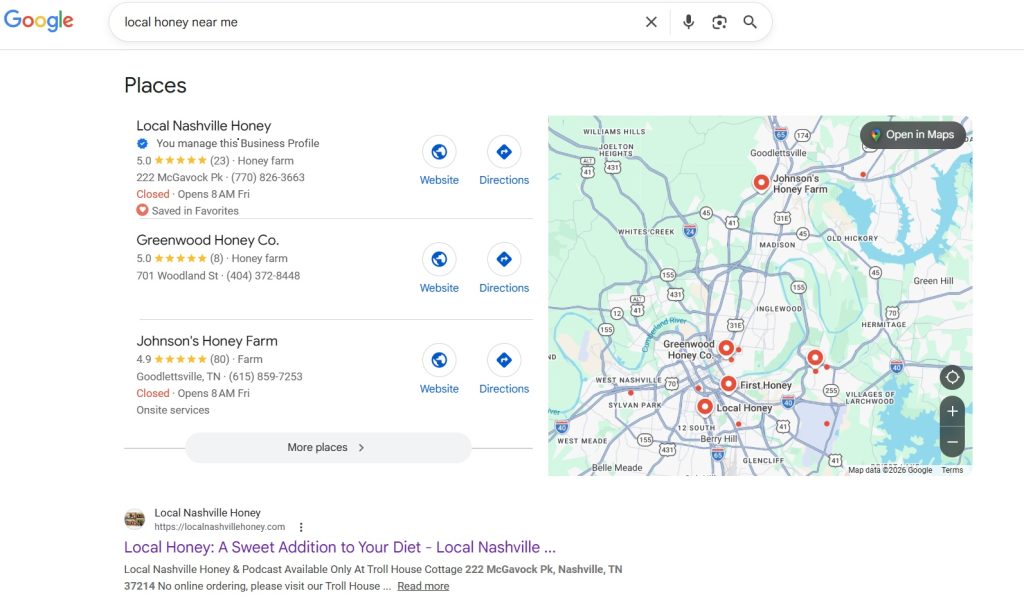
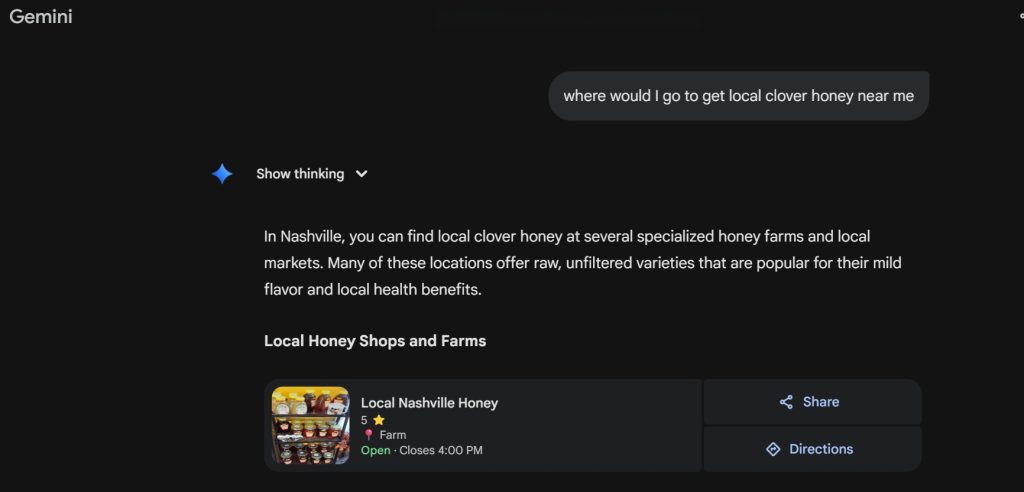
Client example: The local honey business result in AI search because of optimized Google Business Profile, Podcast and Blog content.
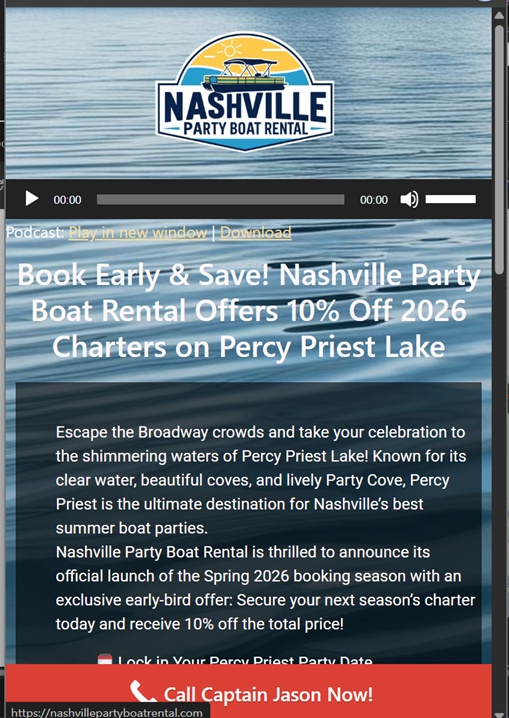
Another example of a local business podcast and blog content
marketing for AI search and search engine results
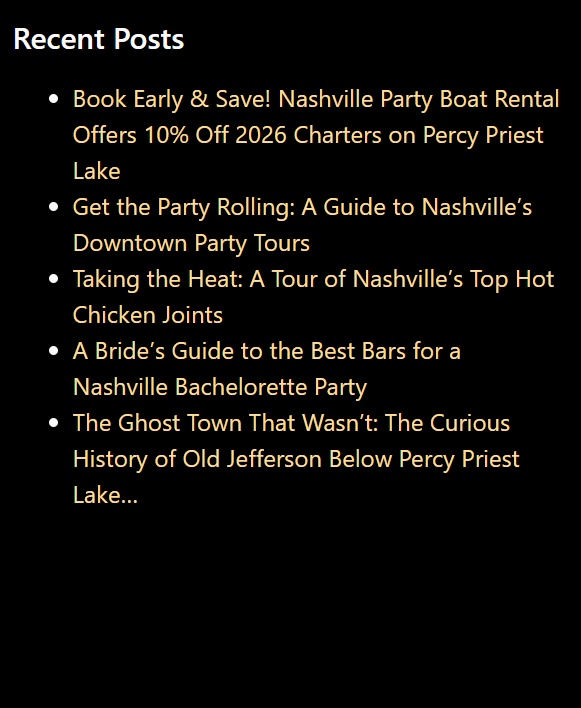
Blog and Podcast Page
Weekly Shows of Content
RSS Feed and Destinations
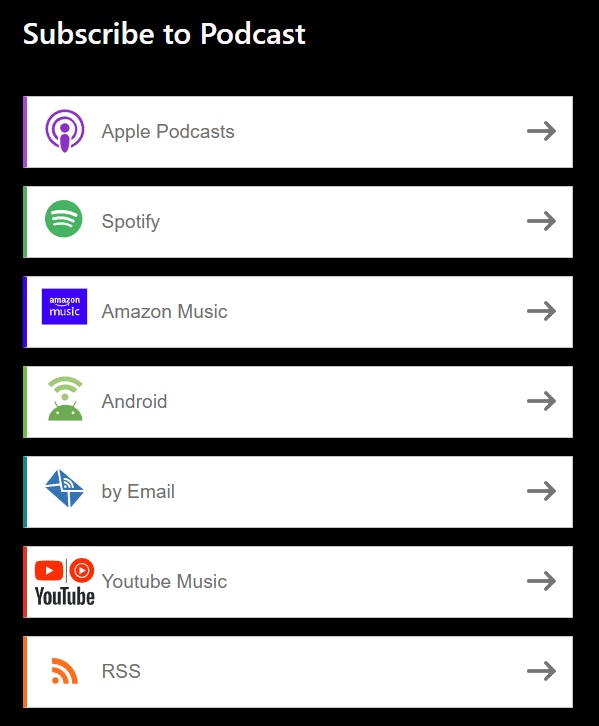
Our Service - Client Only Approves Scripts
Once the client approves our scripts, we use the client’s voice sample to turn them in to 4-5 podcast episodes to be published on all the major podcast networks. We start each episode with client’s SERP term jingle and end with a marketing audio promotion.
Google Paid Ads for More Traffic – Additional Service
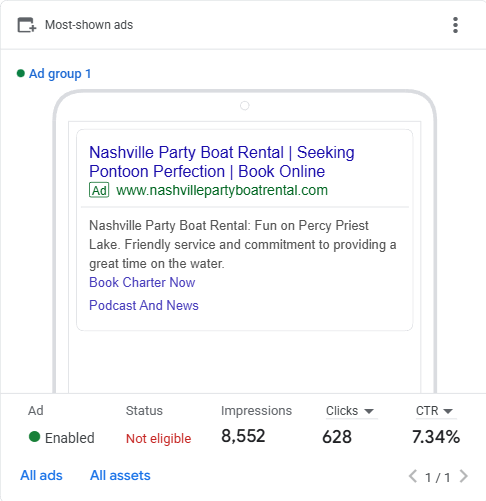
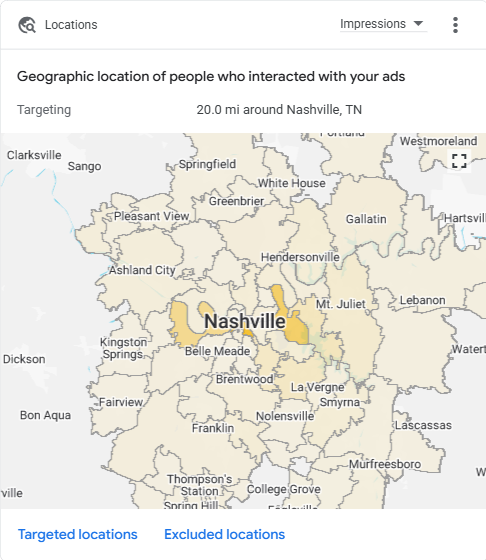
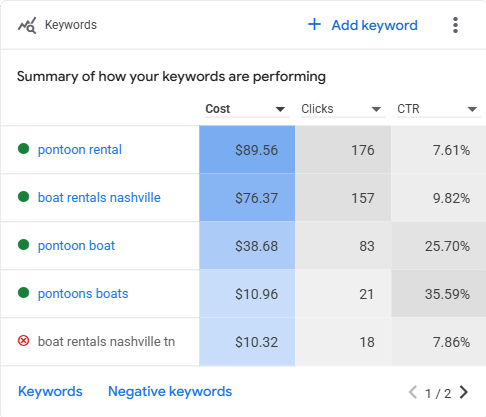
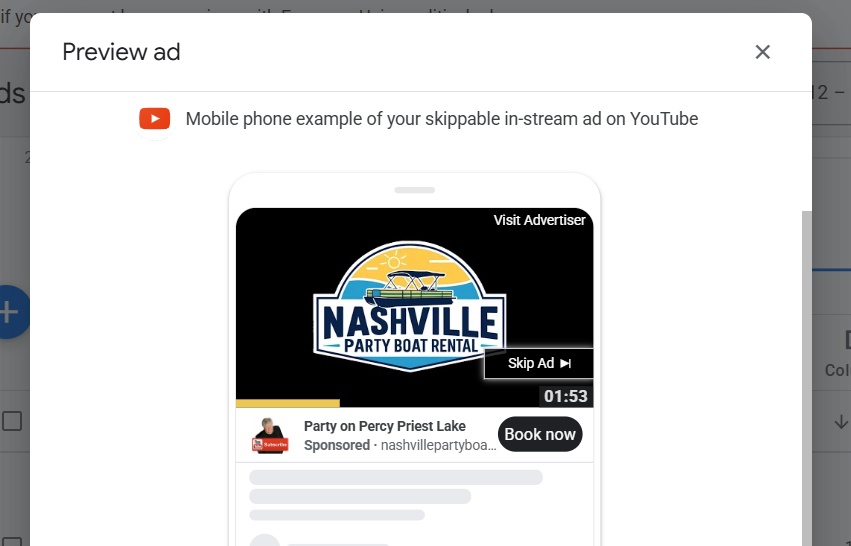
The fastest way to generate local leads and attract new customers is through paid Google Ads that target the search terms people in your area use when looking for your products or services. YouTube video ads is a huge opportunity for local businesses, especially the way we do skippable pre-roll ads. We setup ads, we produce ads, and we monitor ad performance as part of our monthly service. The client pays ad fees direct to Google as we only manage the Google Ads account.
SERP Term Jingles – A Unique Service We Offer
SERP stands for “Search Engine Results Page,” which is the page of results you see after typing a search phrase into Google. When you saturate the market singing the client’s unique SERP term, you teach the market how to find the business online in a proven “auditory earworm memory” strategy. Just think of when you hear singers sing, “We are Farmers” you instantly remember “bum-ba-dum-bum-bum.
“We are farmers” used to mean people who planted corn and raised cows and chickens, but now you instantly think of insurance because of a SERP term jingle!
We add this jingle to the podcasts, YouTube ads, and video landing pages to create awareness in the market.
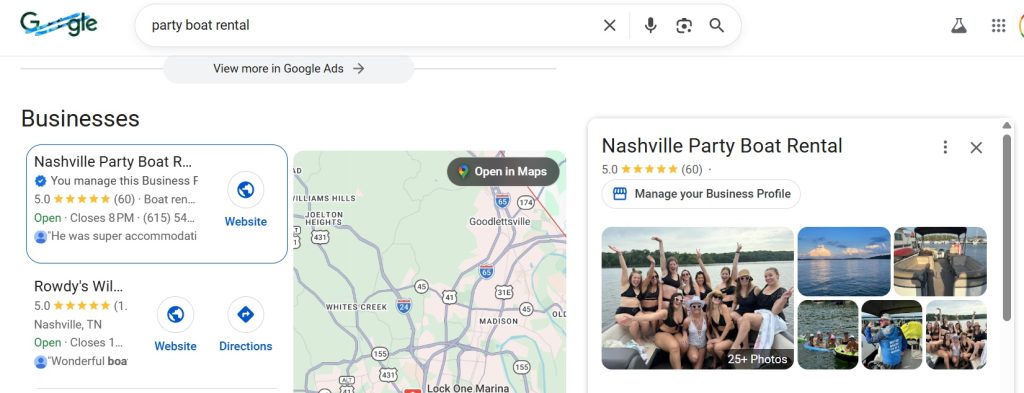
For our client, Nashville Party Boat Rental, we helped them choose a name that matches the top search terms that ther potential customers search.
Our jingle sings that name, our blogs and podcasts optimize for that name, and when you search those words anywhere on planet Earth, this is the Search Engine Results Page.
#1 in GMB
#1 in Google
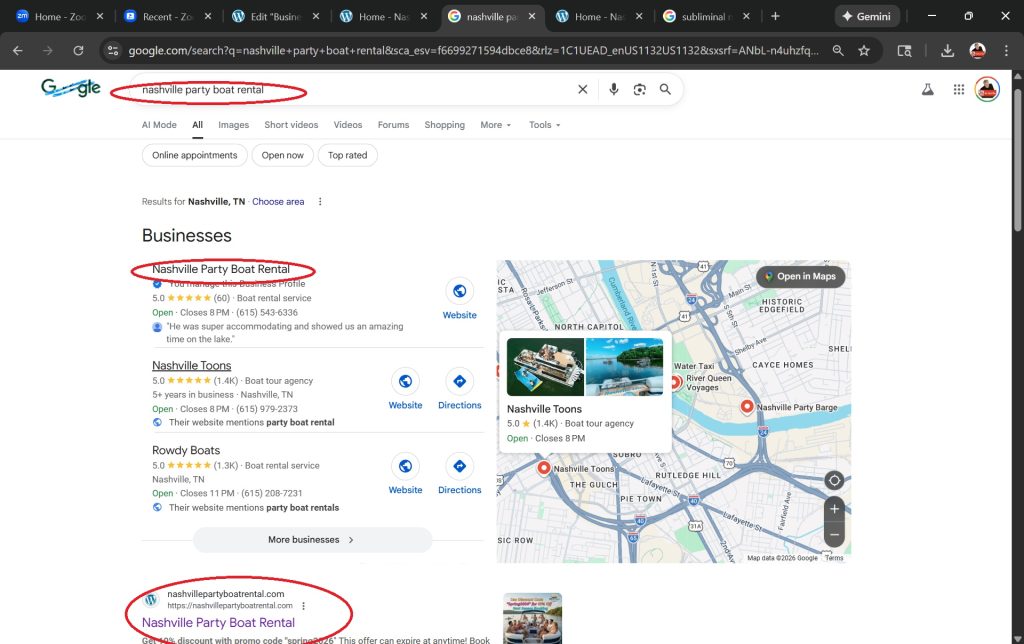
Serp Term Jingle and YouTube Skippable Ad
Video Landing Pages – Another Unique Service We Can Provide
When we buy clicks to our client’s websites, we break down the over all business in to smaller, cheaper and sub-categories of client searches. I will use a pest control company as an example, but all businesses can take the general and breakdown to specific solutions.
A pest control company obivously wants traffic for people searching for pest control, but break it down into other key words like.
Pest Control – Generalized
Termites – Specific problem
Roaches – Specific problem
Rats & Mice -Specific problem
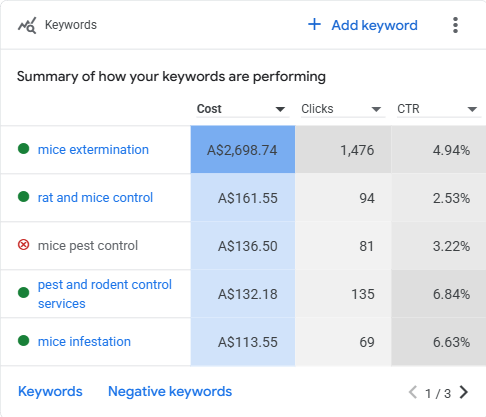
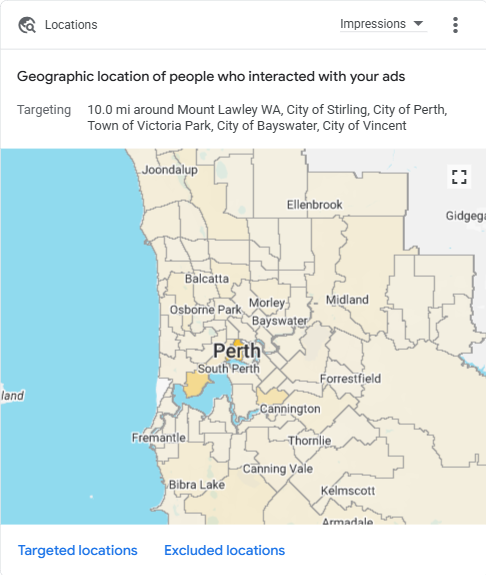
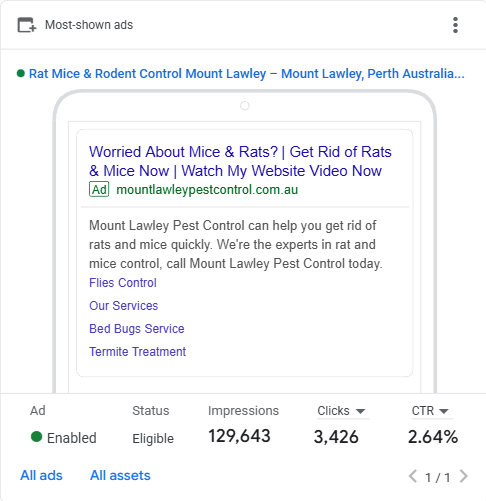
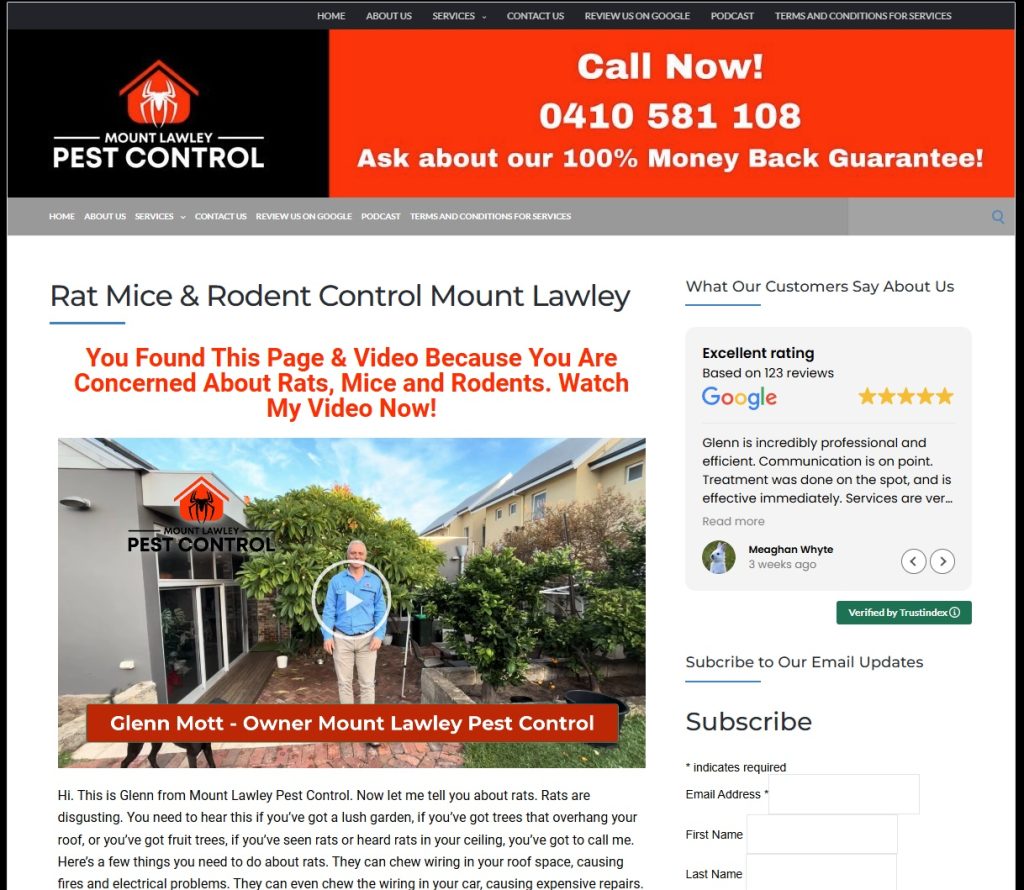
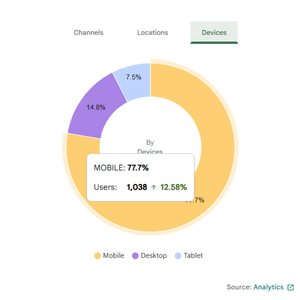
Mount Lawley Actual Stats From Organic and Paid Ads - 80/20 Rule
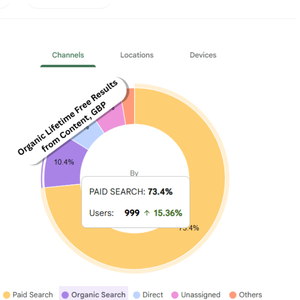
80% of Local Business Searchers are on Mobile - 80/20 Rule
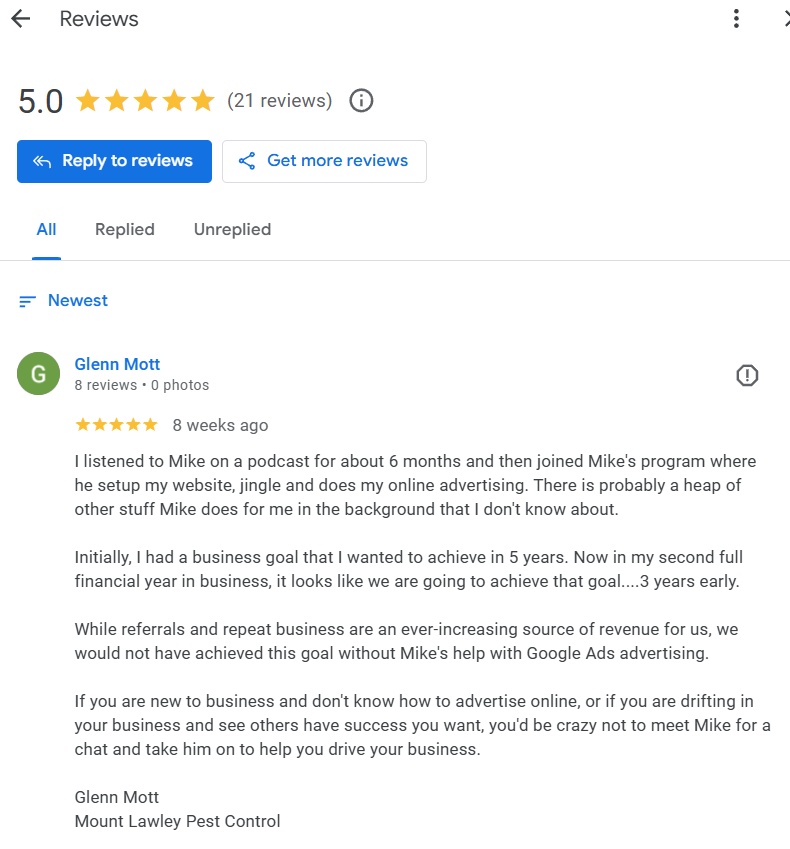
My REAL Google Review From Glenn Mott, Client Example Above
Why Blogging & Podcasts with a Jingle Will Put You Ahead Of Your Competition
For small local businesses, consistent content creation—specifically through blogging and podcasting—is no longer just a “nice-to-have” marketing tactic; it is a primary driver for local search visibility and customer trust.
Here is a breakdown of why this regular output is critical and the specific benefits it provides.
1. Dominating Local SEO and “Near Me” Searches
Search engines like Google prioritize websites that are frequently updated with relevant, high-quality information.
Keyword Footprint: Blogs allow you to target “long-tail” keywords that your main service pages can’t cover (e.g., “how to prep your Nashville garden for spring” vs. just “landscaping services”).
Index Frequency: Regularly adding new pages (blogs) or transcripts (podcasts) signals to search crawlers that your site is active, which can improve your overall ranking in the “Local Map Pack.”
2. Establishing “Top of Mind” Awareness
Most local services are “need-based.” A customer may not need a plumber today, but if they’ve been listening to a short weekly podcast about home maintenance, yours is the first name they’ll recall when a pipe bursts.
The “Internet Audio” Advantage: Podcasts create a literal voice for your brand. Hearing a business owner’s voice builds a level of intimacy and familiarity that text alone cannot achieve.
3. Building Authority and Trust
In a local market, people buy from experts they trust.
The Educator Role: By solving problems through your content (e.g., a pest control company blogging about identifying termite wings), you move from being a “salesperson” to a “trusted advisor.”
Content as Proof: A library of 50 blog posts and 20 podcast episodes serves as a massive “portfolio of knowledge” that proves you know your craft better than the competitor with a one-page website.
4. Compounding ROI and Content Repurposing
One of the biggest benefits of regular production is the ability to “slice and dice” your content to fuel all your other marketing channels:
Social Media: One podcast episode can be turned into three Instagram reels, a LinkedIn post, and a Facebook video.
Email Marketing: Your weekly newsletter is much easier to write when you’re simply sharing a link to your latest helpful blog post.
Summary of Key Benefits
| Benefit | Impact on Business |
| Increased Traffic | More “doors” (URLs) for local customers to find you through search. |
| Higher Conversion | Educated customers are easier to sell to and less likely to haggle on price. |
| Brand Differentiation | Most local competitors aren’t doing this; it makes you look like the “big player” in town. |
| Long-Term Asset | Unlike a paid ad that stops working when you stop paying, a blog post can generate leads for years. |
Strategic Website Outline: Conversion vs. Aesthetic Traps
1. The Local Search vs. Social Media Disconnect
- Low Buyer Intent on Social Media: Users scroll for entertainment, memes, or friends—not during an emergency (e.g., burst pipes, broken furnaces).
- Search Captures High-Intent Buyers: Customers with immediate needs use Google search (e.g., “plumber near me”), not Instagram.
- Targeting & Reach Failures:
- Organic social reach is under 5%.
- Social algorithms distribute content globally rather than within a strict local service radius (Nashville, TN vs. California/Europe).
- High friction: Converting from a social app to a contact form loses leads; local buyers want instant click-to-call access.
- The Proper Role of Social Media: Use it as a secondary trust-building portfolio (before/after photos, proof of active business), while prioritizing search budgets (Local Services Ads, SEO).
2. Why Open-Web Content Beats Social for AI Discovery
- Search Engine Crawlability: Public blogs and RSS feeds are openly indexed by AI bots (OpenAI GPTBot, Googlebot, Common Crawl), whereas Meta platforms remain closed “walled gardens.”
- Information Density: Long-form service guides, location pages, and case studies provide the structured semantic data that Large Language Models (LLMs) need.
- Retrieval-Augmented Generation (RAG): When users ask AI tools real-time queries (“Who is the best local provider?”), engines retrieve indexed websites and transcripts—not social media posts.
- Key AI Optimization Steps:
- Transcribe podcast and video audio into crawlable text.
- Embed structured NAP (Name, Address, Phone) data and schema markup.
- Answer specific, localized questions directly in long-form blog content.
3. The “Hero Image” & Aesthetic Web Design Trap
- The Agency Incentive Gap: Designers often optimize for portfolio aesthetics and design awards rather than lead generation and conversion strategy.
- Above-the-Fold Failure:
- Oversized visual banners push core value propositions and Call-to-Action (CTA) buttons below the fold.
- Heavy videos and uncompressed media cause slow page loads (3+ seconds causes massive visitor drop-off).
- “Clever/Artistic” slogans replace plain-English value statements.
- Cognitive Overload & Bloat: Bloated 20+ page navigation paths create friction compared to streamlined, guided funnels.
- The 4 Essentials of a High-Converting Hero Section:
- Direct Headline: Explains the outcome in 6–10 words.
- Supporting Subhead: Identifies the specific problem solved.
- High-Contrast CTA: Single, clear action (“Get a Free Quote” or “Click to Call”).
- Immediate Trust Anchors: Star ratings, customer badges, or guarantee stamps placed next to the CTA.
4. Understanding Drop-Off & Bounce Rates (UA vs. GA4)
- Average Single-Page Drop-Off Rates:
- B2B / Lead Gen: 25% – 50%
- E-Commerce: 35% – 50%
- Local Services: 50% – 70% (frequently “good bounces” where users grab a phone number and immediately call)
- Blogs / Content: 65% – 90%
- Universal Analytics vs. GA4:
- Traditional Bounce Rate: Percentage of single-page visits with no second click.
- GA4 Engaged Sessions: A visit is not a bounce if the user stays for 10+ seconds, views 2+ pages, or completes a conversion event.
- Primary Drivers of Unwanted Drop-Off:
- Slow mobile load times (>3 seconds).
- Poor mobile navigation and layout shifting.
- Mismatched messaging between search intent and landing page headline.
5. Quick Comparison: Aesthetic Design vs. Conversion-Centered Design
| Dimension | Aesthetic “Agency” Site | Conversion-Centered Site |
| Hero Section | Full-screen abstract video or generic stock photo | Clear value statement, trust badges, and prominent CTA button |
| Copywriting | Vague, artistic branding statements | Direct, benefit-focused problem solving |
| Site Structure | Bloated menus and multi-tier sub-pages | Focused navigation guiding users to contact/book |
| Performance | Heavy media, slow load times | Lightweight, fast-loading, mobile-first design |
Which is better for long term content, a blog/podcast post on your website you own or a Facebook/Instagram post? And why?
For long-term content value, a blog or podcast post on a website you own is significantly better than a Facebook or Instagram post. [1, 2, 3]
While social media is excellent for quick engagement and real-time interaction, it fails at longevity. A self-hosted website acts as an appreciative asset that builds equity over time, whereas social media posts operate on a rapidly expiring shelf life. [1, 2, 3, 4]
Why an Owned Website Wins for the Long Term
-
Search Engine Discoverability (SEO): Blog posts and podcast show notes are indexed by search engines like Google. A well-optimized post can rank for specific keywords and drive consistent, free organic traffic to your site for months or even years after publication. [1, 2, 3]
-
The “Shelf Life” of Content: The lifespan of a Facebook or Instagram post is measured in hours; once it drops off the user’s feed, it is effectively dead. In contrast, a blog post acts as evergreen content that continues working quietly in the background. [1, 2, 3]
-
Platform Ownership and Control: When you rely entirely on Facebook or Instagram, you are building your business on “rented land”. Algorithm changes can instantly wipe out your organic reach, or a platform can suspend your account without warning. On your own website, you control the layout, user experience, and monetization rules. [1, 2, 3]
-
Deeper Audience Conversion: Social media networks are designed to keep users scrolling on their apps. A visitor on your website is shielded from those distractions. This makes them far more likely to subscribe to an email newsletter, explore your services, or purchase a product. [1, 2, 3]
-
No Content Constraints: Platforms like Instagram impose character limits, image caps, and formatting restrictions. Your website allows for deep, comprehensive, long-form guides, embedded audio, and flexible designs that build real authority. [1, 2]
Summary Comparison
The Winning Strategy: Repurposing
You do not have to choose one over the other. The most efficient approach is to publish on your website first as your primary asset. Then, slice that long-form post into smaller text snippets, quote graphics, or short video reels for Facebook and Instagram. Use the social platforms as a billboard to drive traffic back to the website where you own the relationship. [1, 2, 3]
